
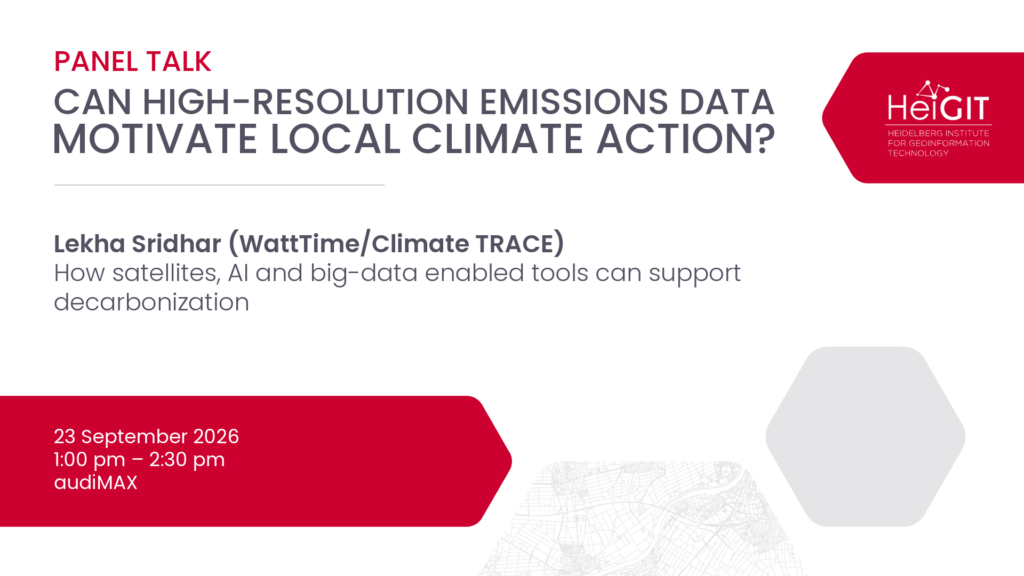
High-resolution climate and emissions data can support decarbonization, but its value depends on whether it can inform concrete decisions.
On 23 September, Lekha Sridhar from WattTime/Climate TRACE will give a talk on how satellites, AI, and big-data-enabled tools can support decarbonization.
Talk: How satellites, AI and big-data enabled tools can support decarbonization
Lekha Sridhar, WattTime/Climate TRACE
Decarbonization is often slow, inefficient, or stalled due to a lack of actionable data. Climate TRACE is a global coalition of organizations that aims to address this hurdle by building a comprehensive database of GHG emissions at the asset or facility level. Each sector is led by an organization that has domain expertise and applies a combination of different methods, including computer vision, machine learning, other statistical approaches, and manual data collection about site-level characteristics where available. The resulting database provides an inventory of GHG emissions for any administrative area globally with a two-month lag. On top of this, Climate TRACE is also building additional tools such as non-GHG emissions estimates, PM2.5 plume analysis, the decarbonization potential of different solutions, and scenario-planning tools for states and regions.