Originally from tropical and subtropical Asia, Aedes albopictus has spread to nearly all continents through passive transport of eggs. Now established in parts of Germany, including the Upper Rhine Valley, the species poses both a public health risk and a growing urban nuisance. As a known vector of Dengue, Zika, and Chikungunya, and due to its high blood-feeding rates, Aedes albopictus reduces quality of life in affected areas. Although intensive monitoring and control programs have successfully suppressed local populations, newly affected areas still face challenges in implementing cost-effective and operationally efficient strategies. In particular, the role of urban morphology and building patterns in shaping the success of door-to-door larval source reduction remains insufficiently understood.
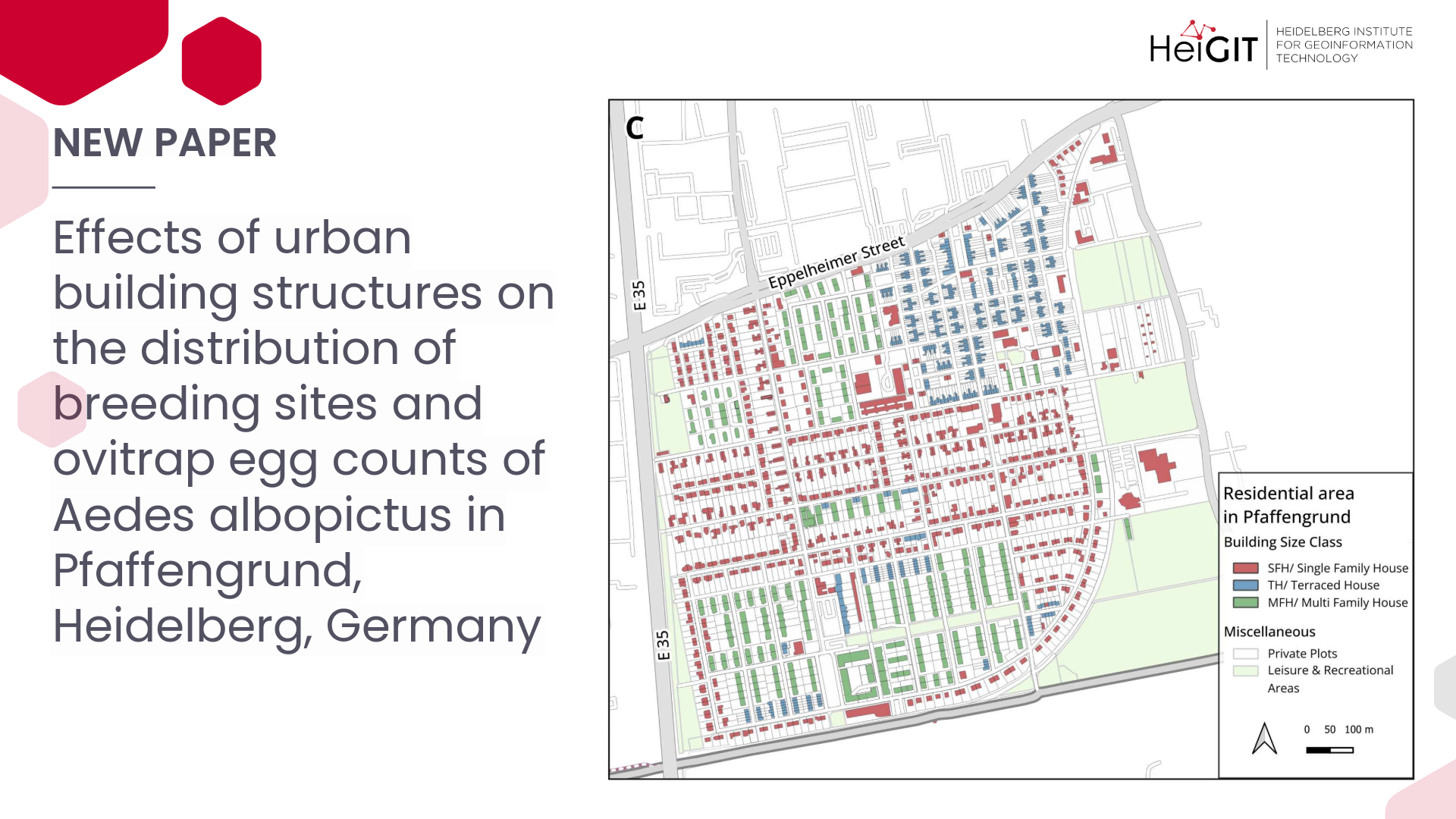
To address this gap, researchers analyzed control and monitoring data from a suburban neighborhood in Heidelberg with an established population. The study assessed how building type influences the number of breeding sites at parcel level and egg counts in ovitraps within 200-meter catchment areas, while also evaluating the moderating effect of ongoing control measures. Additionally, the analysis considered breeding site availability, the proportion of different building types, and the presence of uncontrolled parcels in shaping oviposition patterns.
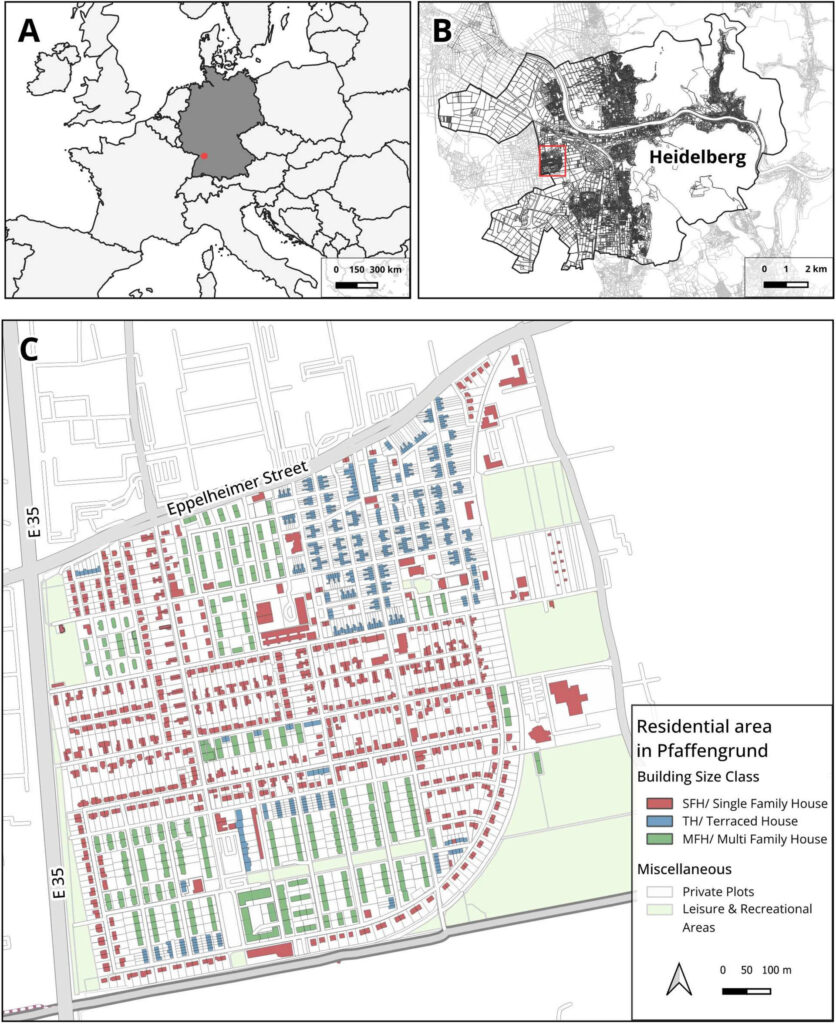
The results show that parcels associated with terraced houses contained the highest number of breeding sites, while multi-family housing plots showed the lowest breeding site density. Areas with a higher share of terraced buildings also exhibited increased ovitrap egg counts. Conversely, uncontrolled areas and large breeding sites were negatively associated with ovitrap egg numbers, indicating that egg counts alone do not directly reflect mosquito density and may instead signal a lack of alternative oviposition sites. Existing control measures proved effective in reducing breeding site numbers, yet unmanaged spaces such as private plots without regular access remained a persistent obstacle.
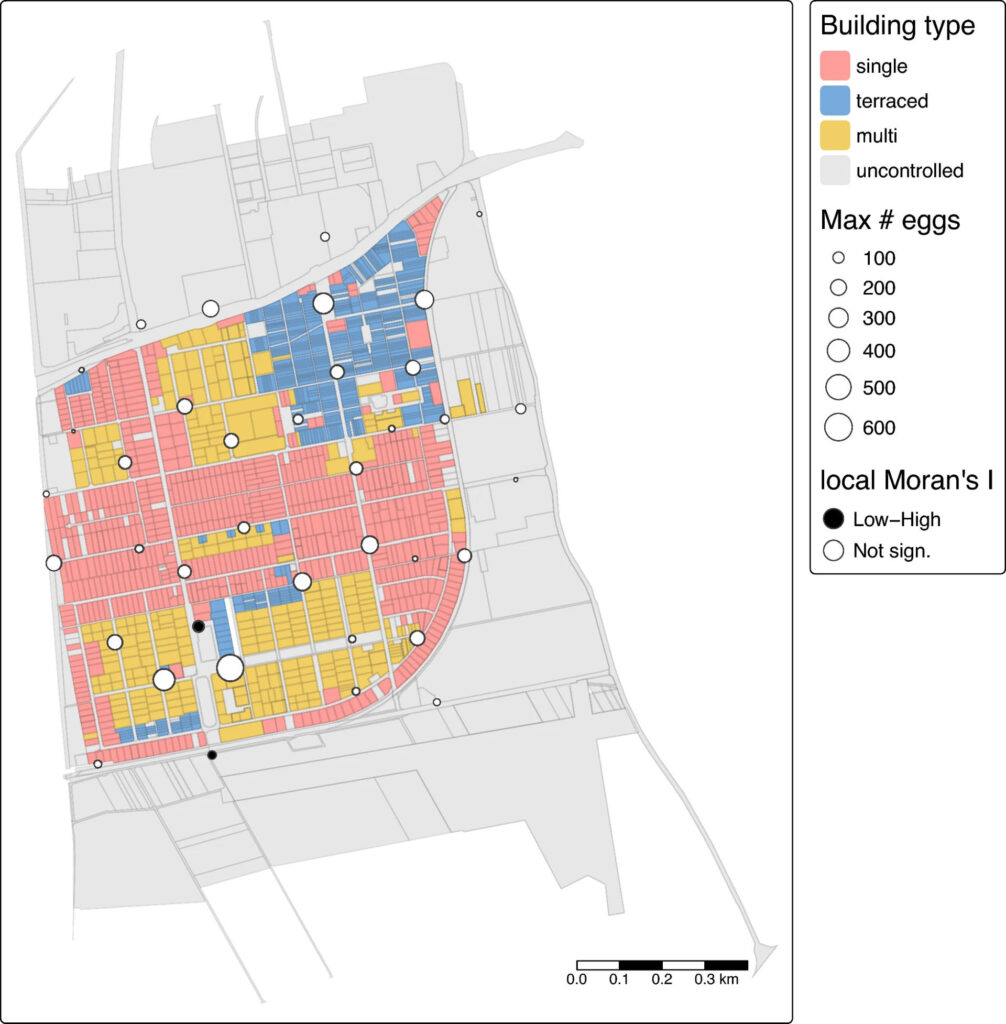
Overall, the findings demonstrate that building typology, as part of urban structure, strongly influences breeding site distribution and egg-laying patterns. Terraced housing plots and large containers appear to act as key population sustainers, suggesting that prioritizing these areas could improve the efficiency of control programs. Comprehensive coverage, particularly of private properties, remains essential, and complementary approaches such as the Sterile Insect Technique or the use of Wolbachia may further support suppression in inaccessible locations. Integrating urban morphology into vector management planning therefore offers a pathway toward more targeted, cost-effective, and sustainable control of Aedes albopictus populations in Germany.
Reference: Wahl, C., Lautenbach, S., Tokatlian Rodríguez, A. et al. Effects of urban building structures on the distribution of breeding sites and ovitrap egg counts of Aedes albopictus in Pfaffengrund, Heidelberg, Germany. Parasites Vectors 19, 393 (2026). https://doi.org/10.1186/s13071-026-07655-z