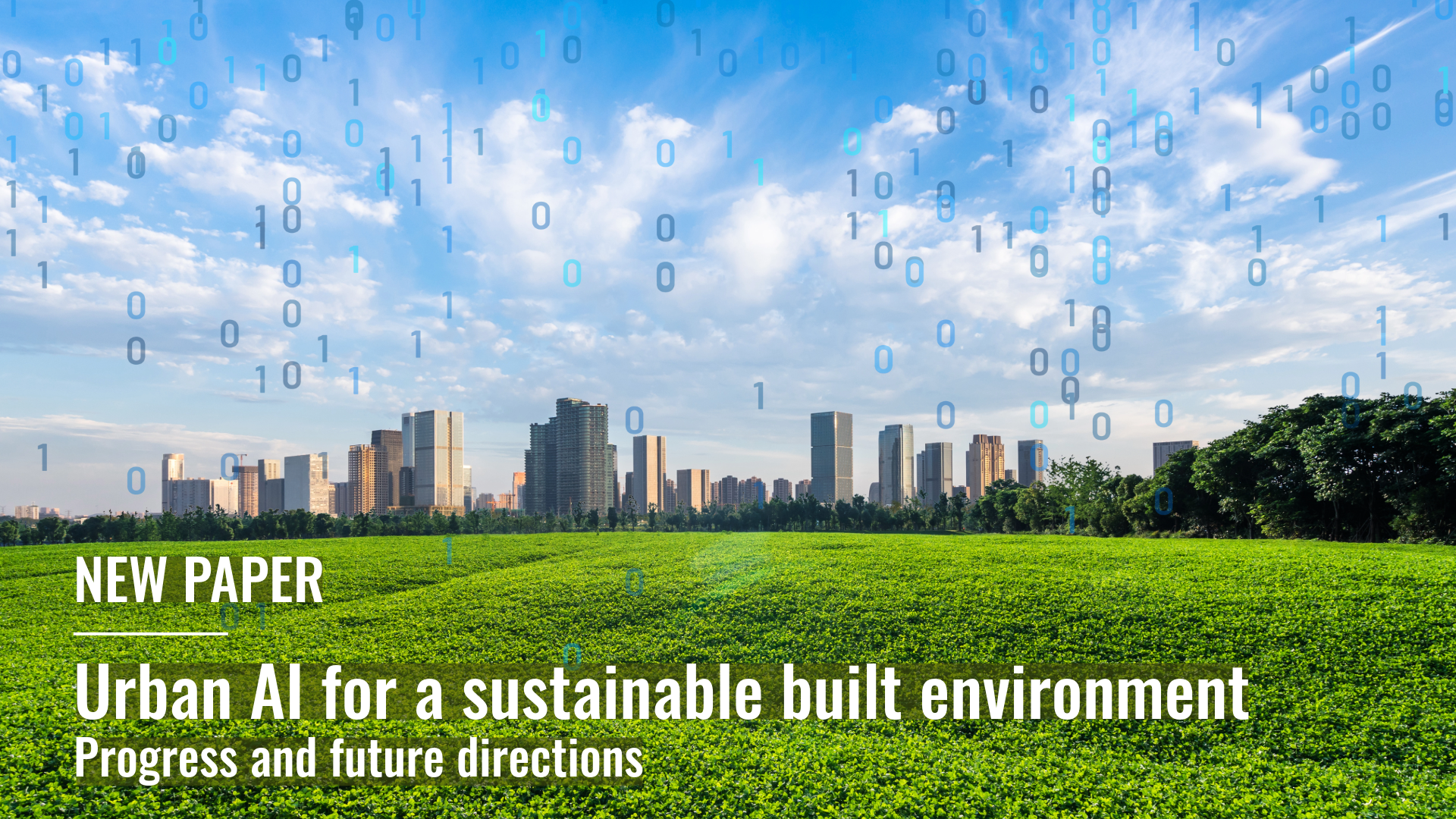
This special issue, framed by the guest editors Steffen Knoblauch (Heidelberg University, Germany), Hao Li (Technical University of Munich, Germany), Filip Biljecki (National University of Singapore, Singapore), Wenwen Li (Arizona State University, USA), and Alexander Zipf (Heidelberg University, Germany), addresses the growing role of Urban AI at the intersection of artificial intelligence, spatial computing, and urban science. The editorial positions the collection within ongoing efforts to link computational methods with spatial theory and empirical research in order to better understand complex urban challenges. It presents Urban AI as a research field focused on integrating diverse geospatial data sources, including satellite imagery, street-level observations, and IoT data, to support evidence-based analysis and decision-making for sustainable urban environments.
Rapid advances in data availability and machine learning are creating new opportunities and challenges for urban research and planning. The editorial outlines the main themes of the special issue, including AI-driven methods for integrating heterogeneous urban data, modelling urban processes such as mobility, land use, public health, and climate resilience, and examining how AI systems interact with social and spatial dynamics in cities. Its focus is on approaches that combine geographic information science with machine learning and computer vision. While methodological innovation and practical relevance is emphasized, ethical, legal, and governance issues should also be considered while using AI in urban contexts.
Overall, the editorial presents the special issue as a contribution to urban analytics and city science that demonstrates the capacity of Urban AI to reshape how cities understand, govern, and respond to environmental and social challenges. The collected studies show how the integration of advanced sensing technologies, artificial intelligence, and participatory data practices enables more detailed and dynamic insights into the interactions between people, infrastructure, and urban environments. The research also illustrates how Urban AI can support more precise and context-sensitive interventions in urban planning and governance. Taken together, the papers showcase current practices and emerging directions in Urban AI research, pointing toward more sustainable, inclusive, and resilient urban futures.
Reference: Knoblauch, S., Li, H., Biljecki, F., Li, W., & Zipf, A. (2026). Urban AI for a sustainable built environment: Progress and future directions. Environment and Planning B: Urban Analytics and City Science, 0(0). Urban AI for a sustainable built environment: Progress and future directions – Steffen Knoblauch, Hao Li, Filip Biljecki, Wenwen Li, Alexander Zipf, 2026