2025 was an exciting year for HeiGIT, full of new projects, fresh ideas, and plenty of change, both technical and organizational. At the same time, it was also a year of reflection on where we come from and what continues to drive us.
Since our founding in 2019, our vision has been simple but ambitious: to advance open geoinformation for the benefit of society and the environment. We build tools to support informed decisions in sustainable mobility, humanitarian aid, and climate action, powered by spatial data analytics and machine learning. This mission has shaped our work from the very beginning and is still at the heart of what we do today.
A lot has changed over the years, but some things have remained constant. Our long-standing collaboration with the GIScience research group continues to form the backbone of our technologies, and we are grateful for the ongoing exchange that fuels so many of our innovations. We also marked a major milestone for our funding organization, the Klaus Tschira Stiftung, which turned 30 this year.
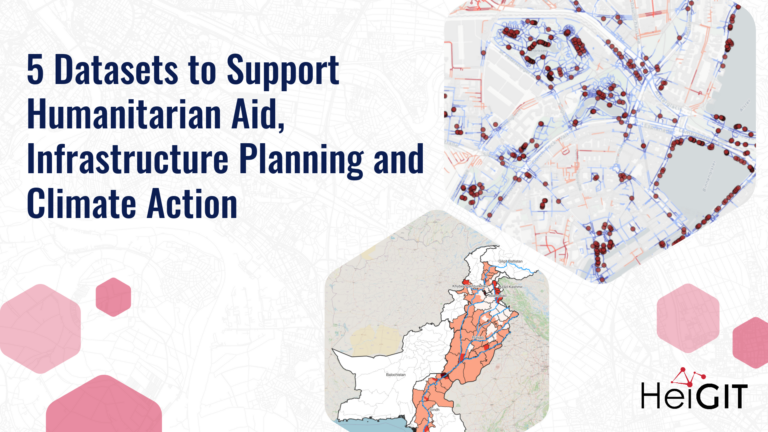
On the innovation side, many of our long-standing ideas finally came to life: from our first flood risk assessments in Pakistan to the launch of the Climate Action Navigator (CAN) and new features for ohsomeNow Stats and openrouteservice. We also expanded our network in humanitarian response and kicked off new collaborations in climate action.
Internally, we also underwent some structural changes. The former Smart Mobility and Big Spatial Data teams merged to form Technical Innovation Group (TIGr), bringing together complementary expertise and strengthening the technical foundation of our work. We also saw a change in leadership: we said farewell to our managing director Gesa Schönberger and welcomed our Innovation Manager, Stefan Gumbrich as her successor. Stefan describes this transition as “both an honor and a joy,” and looks forward to continuing our shared mission together with the HeiGIT team.
As a tradition, we also try to give back every year beyond our work: HeiGIT is donating 5,000 € to the Heidelberger Bündnis to support local initiatives in our home city.
Of course, we cannot capture every project, achievement, or idea that moved us this year. Instead, we want to share a few personal highlights from our colleagues: what made them proud, which moments stood out, and what excites them most for 2026.
What Made This Year Special For Us
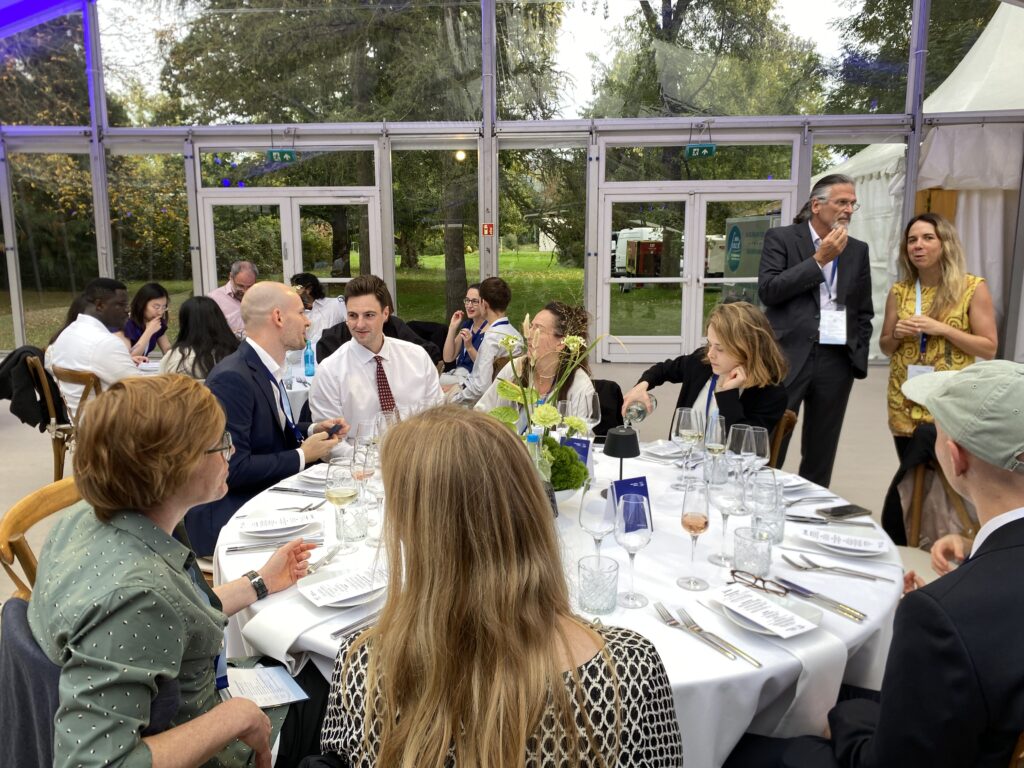
This year, our achievements reflected the dedication of our team. Colleagues took pride in seeing long-term projects come to life.
A highlight of the year was launching the Climate Action Navigator with new assessment tools to help city planners, NGOs, and grassroots organizations build more climate-resilient communities. “It was a great team effort, and the positive feedback was well deserved. I’m especially proud of how the team adapts to change and integrates new members smoothly,” shared Kirsten von Elverfeldt, Community Engagement Manager for Climate Action. As the Climate Action Navigator gradually expanded with additional assessment tools, it sparked discussions with stakeholders on walkability, bikeability, heating emissions, and land consumption, underscoring the demand for accessible, actionable indicators.
On the research front, and as always in close collaboration with the GIScience research group, we published numerous papers in 2025. Our growing body of manuscripts reflects years of collective effort. A good example of this is the HEAL project: over several years, it produced multiple publications and led to a routing app now used in cities to support heat-aware mobility. Reflecting on this work, Christina Ludwig, Researcher at HeiGIT and GIScience, shared: “Having our work finally published is the result of a lot of dedication and very good collaboration within the team over the last three years, which makes this special.”
In humanitarian geoinformation, tools like the Sketch Map Tool reached new communities, supporting participatory mapping worldwide, while the IFRC Networks GIS Training Platform expanded to English and Spanish, strengthening accessibility, knowledge transfer, and capacity building.
Some projects start small and gradually develop into major initiatives. A case in point is the work on AILAS project, which began with a specific partner need in Madagascar and grew into a central focus for the team.
“It’s a great example of how a small, partner-driven idea can evolve into a core topic. What began with concrete requirements on the ground gradually expanded: a ZIM proposal, integration into a follow-up project, deploying cameras in Madagascar, and now receiving large amounts of real field data,” reflected Marcel Maurer, Product Owner at the Geoinformation for Humanitarian Aid Team.
Memorable Moments
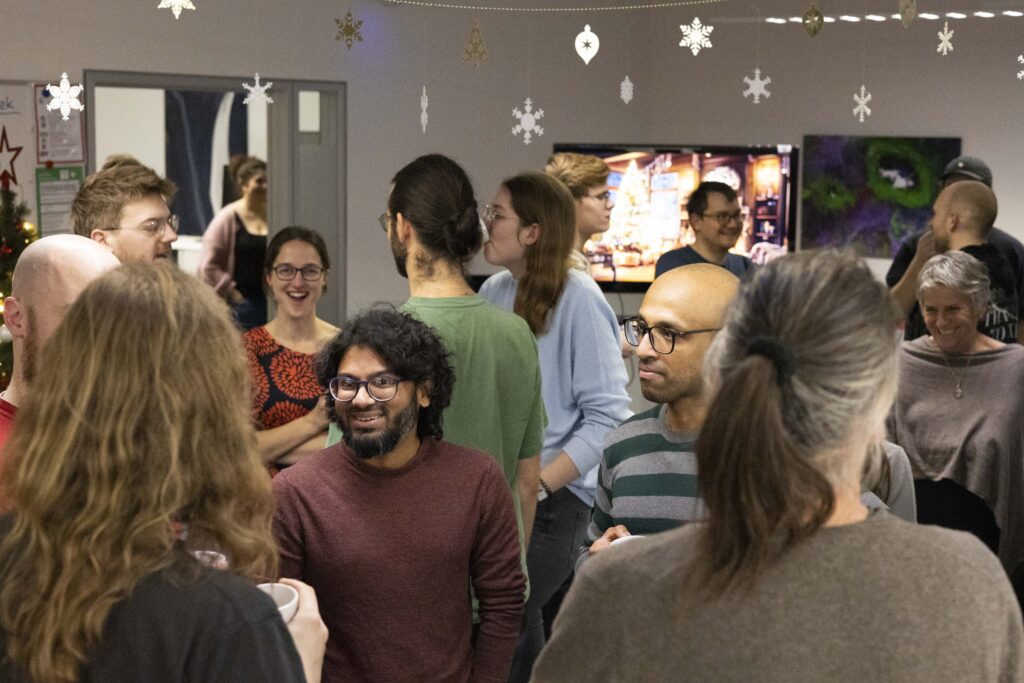
Beyond achievements, colleagues remembered standout moments when teamwork, recognition, and meaningful connections made their work resonate and highlighted HeiGIT’s ties to the wider community.
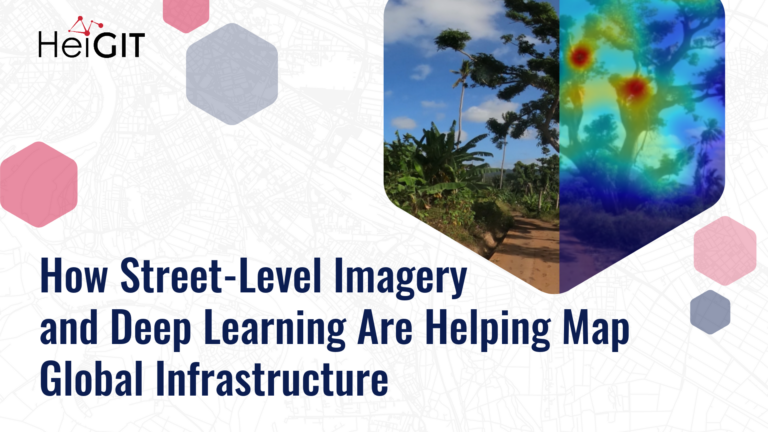
A major milestone was publishing a road surface dataset along with a paper based on street-level imagery, marking HeiGIT’s shift from analyzing external data to creating open datasets. The first dataset, along with the newly published PlanetScope global road surface dataset, are both freely available on the Humanitarian Data Exchange, supporting research, economic development, environmental sustainability, route planning, and emergency response. “For me, it shows where our work is going: producing relevant data and turning research into reliable services,” said Benjamin Herfort, Team Lead of the Technical Innovation Group.
Hosting the AI4AA (Artificial Intelligence for Anticipatory Action) workshop was another highlight. “The workshop brought together humanitarian practitioners, technical experts, and researchers to discuss the values and risks of AI for anticipatory action,” recalled Melanie Eckle-Elze, Partner Engagement Manager at Geoinformation for Humanitarian Aid Team.
Many memorable moments were tied to the real-world impact of our tools. For instance, ohsomeNow Stats, with its new data and H3 hexagon maps, has become a key resource for humanitarian mapping groups to manage disaster scenarios, store data, and motivate mappers.
Looking Ahead to 2026
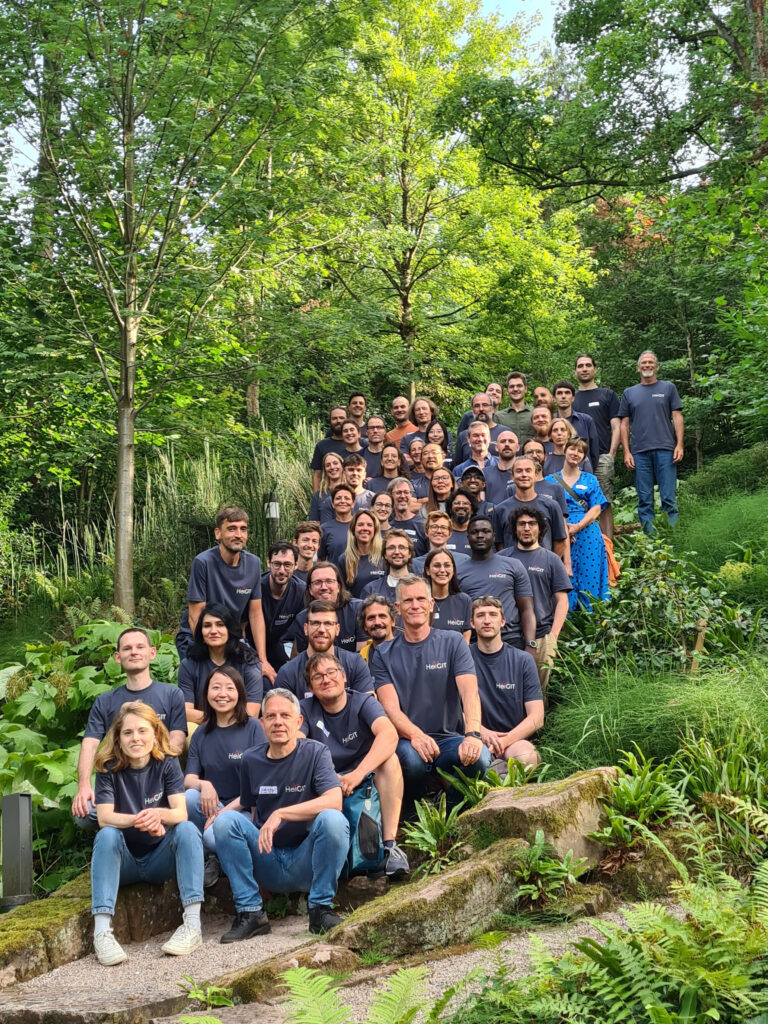
When we asked colleagues what excites them most about 2026, one theme stood out: making our tools even more useful and easier to apply in real-world contexts.
A major focus will be routing and mobility. Collaborations with organizations like the Logistics Cluster (LogIE) provide direct feedback from field missions. Their experience on the ground supports the development of a dynamic routing prototype for humanitarian logistics, built on openrouteservice. We also plan to continue improving climate-sensitive travel and work to integrate public transport routing in openrouteservice. This is still work in progress, and we are excited to share the first results of these efforts in 2026.
As OpenStreetMap (OSM) continues to be the cornerstone of many of our technologies and methods, ohsome-planet and ohsomeDB will simplify the use of OSM data and support research-driven applications.
Street-level imagery will play an increasing role in research and applied projects. The Climate Action team aims to extract new insights to feed into the navigator, helping cities and partners plan more resilient, accessible environments. There is more to come, as we plan to enrich our datasets and fine-tune our models with street-view-imagery.
Tools supporting humanitarian and community engagement will also evolve with the focus on inclusivity, smoother integration with partner workflows, and reaching more trainers and volunteers worldwide. Across projects, there is a shared goal to release more open datasets and improve the full cycle from data collection to decision-making, feedback, and collaboration, grounded in research.
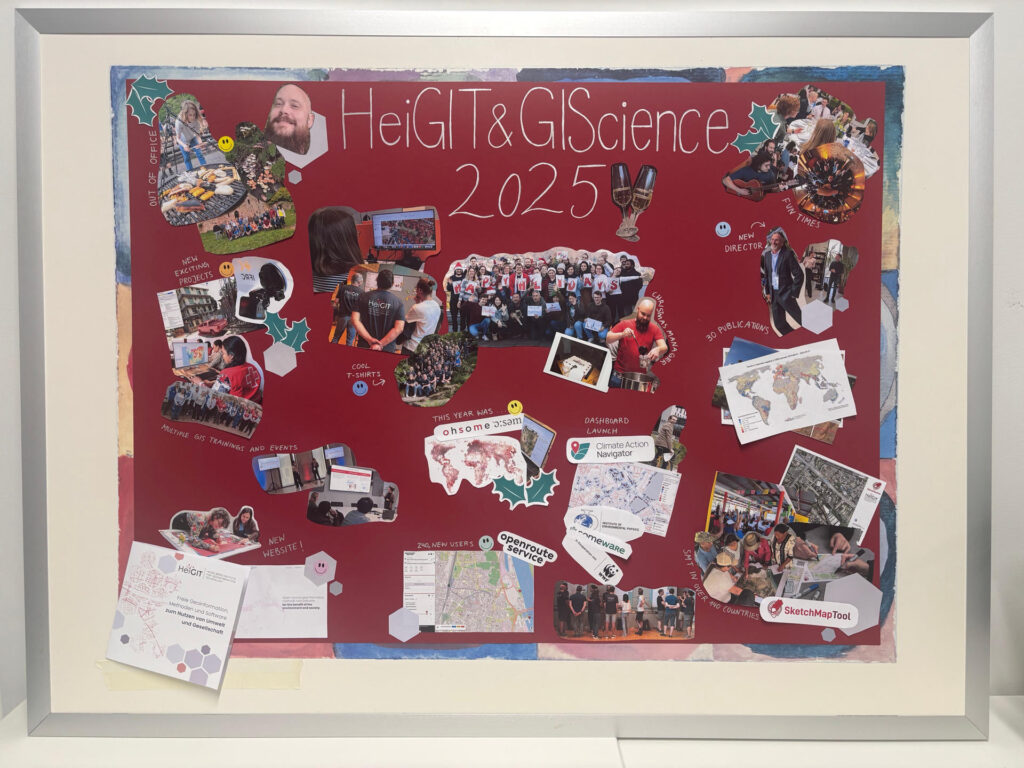
As we wrap up the year, we want to extend our heartfelt thanks to all who make our work possible.
Thank you to the Klaus Tschira Stiftung for providing base funding and supporting our mission, to GIScience for providing the research foundation that informs our tools, and to all our partners and collaborators for sharing our vision and turning it into reality with us.
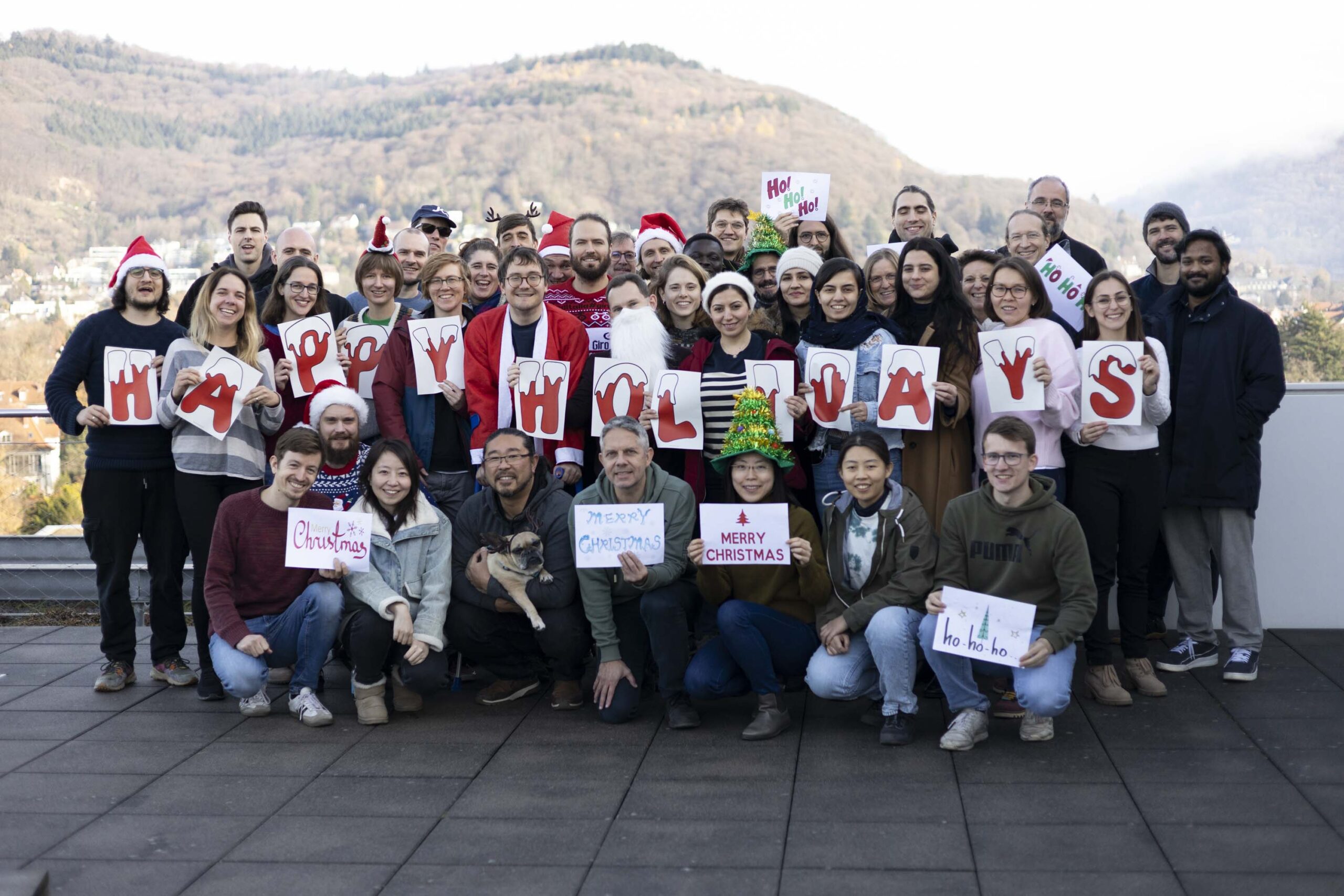
Merry Christmas and Happy New Year! Stay tuned for all the exciting updates in 2026!