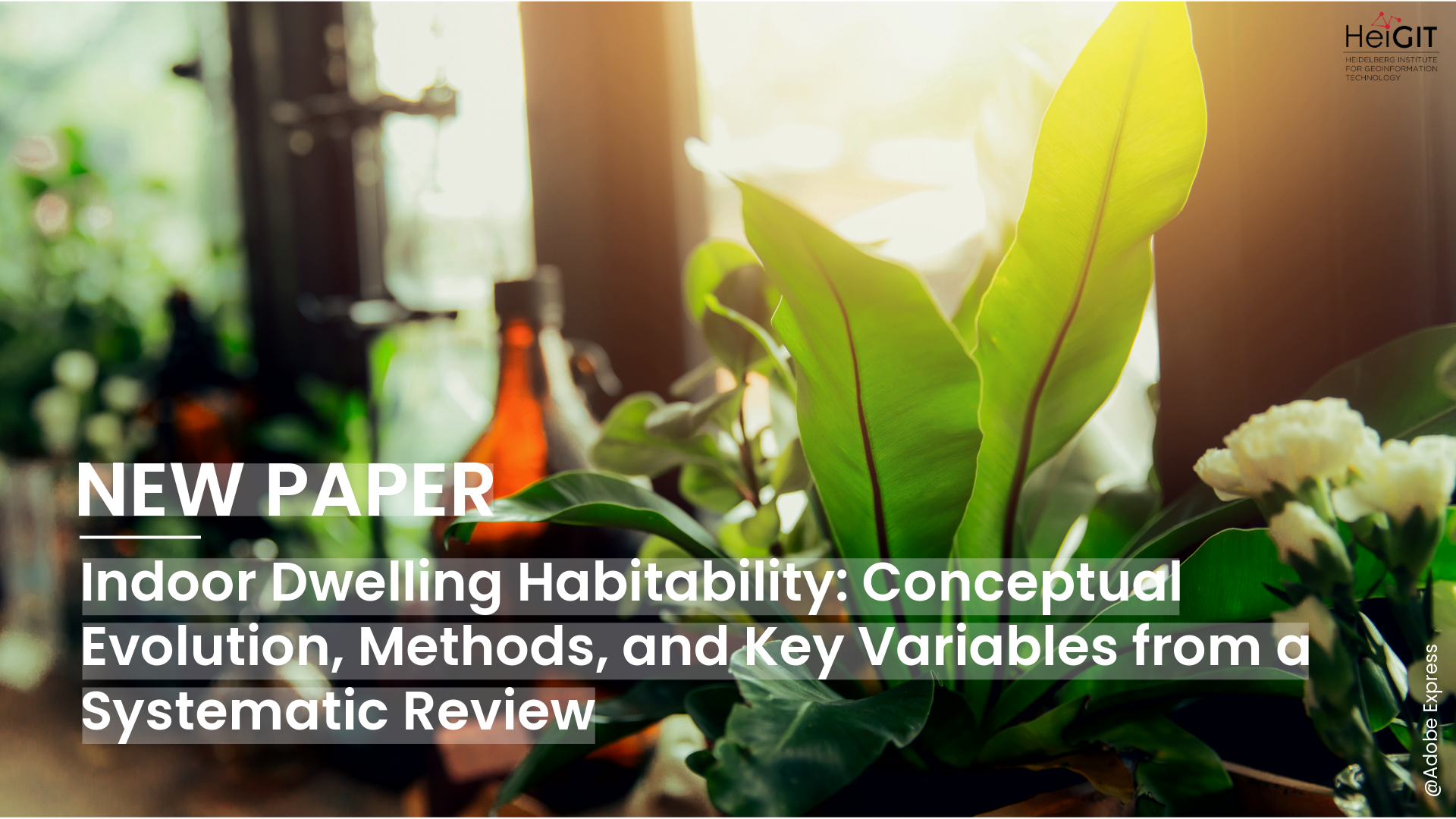
This study reviews 97 scientific works published between 1995 and 2025. Of these, 68 were found through systematic database searches and 29 through manual searching, within a review process following the PRISMA 2020 framework.. The analysis reveals that the idea of indoor dwelling habitability has shifted over time. It now goes beyond basic physical standards and infrastructure to include perception, well-being, health, and social resilience. The review notes that this broader view became more common from 2018 onward, with a noticeable increase from 2020.
The authors also looked at how indoor dwelling habitability is measured. Mixed method approaches were most common, used in 47% of the studies. These methods let researchers combine objective environmental data with residents’ subjective perceptions. Still, only 18% of the studies included habitability-related indices, and just 2% proposed indices that focused on the inside of the dwelling.
In the reviewed literature, researchers first found 220 variables, harmonized into 52 standardized variables. The 30 most common variables showed up in 94% of the studies. The most frequent ones included basic services, lighting, ventilation, humidity, overcrowding, temperature, thermal comfort, indoor air quality, and floor area. Environmental and functional factors make up a stable core, while socio-psychological, economic, spatial, and constructive aspects appear less often across different studies and contexts.
Based on these results, the authors suggest using future frameworks with two parts: a universal core and context adaptive parameters The core would include lighting, ventilation, humidity, temperature, indoor air quality, basic services, and overcrowding. The context specific parameters would reflect local climate, culture, and regulations. A strong framework should also include both measured conditions and occupant perception.
Reference: Reyes-Riveros, A., Martínez-Soto, A., Lautenbach, S., & Zipf, A. (2026). Indoor Dwelling Habitability: Conceptual Evolution, Methods, and Key Variables from a Systematic Review. Indoor Environments, 100189. https://doi.org/10.1016/j.indenv.2026.100189