We have recently released the version 2.0 of the ohsome ecosystem, which includes the ohsome API, the ohsome quality API, and the ohsome dashboard. The legacy ohsome API v1 and the OpenStreetMap History Database (OSHDB) remain available until November 30, 2026, and we will shut them down after that date. If you use ohsome API v1 in your research or tools, please migrate to v2.0 before then.
We started working on this release about two years ago with our first experiments on a new backend. As described in our roadmap update, ohsome 2.0 replaces the OSHDB with a Postgres backend extended by PostGIS and Citus. Complex queries that previously required heavy computing resources now return results within seconds, and data extraction for historical snapshots works much better than before. Many people from different groups contributed to this release, and we thank all of them for their work.
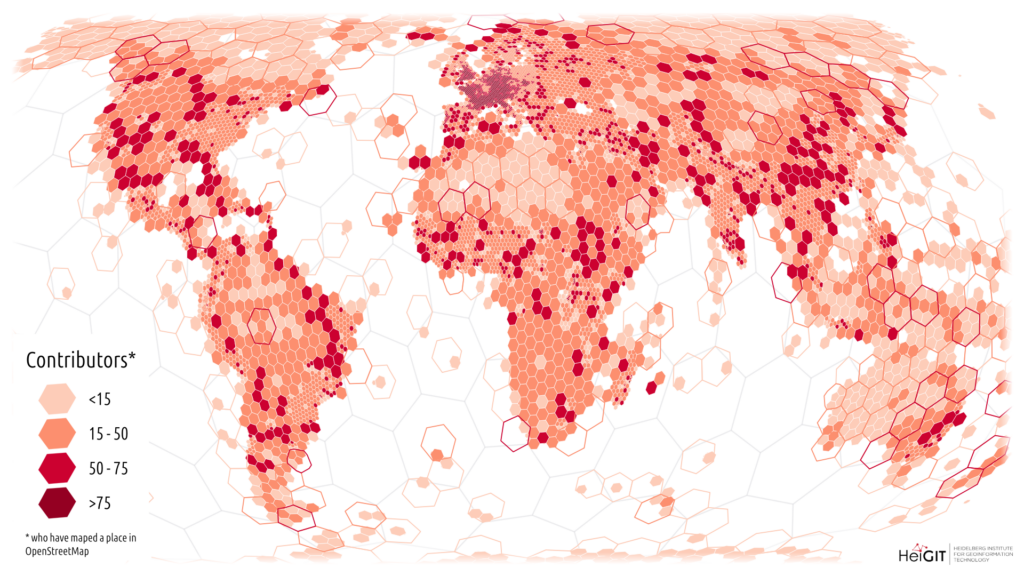
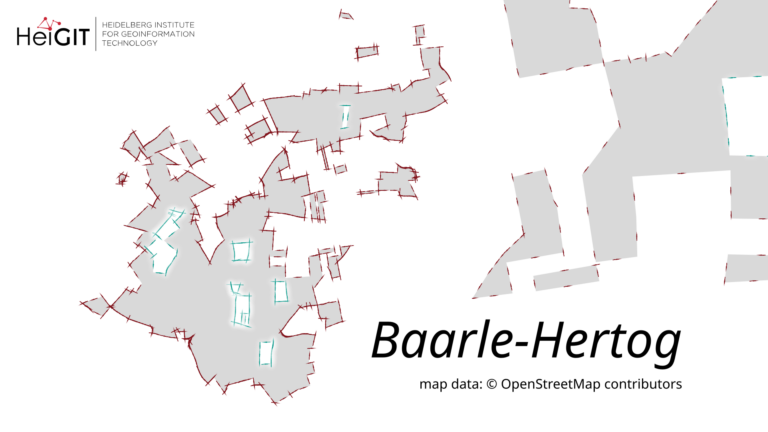
How this map was created?
First, download all OSM places using the data extraction endpoint of the ohsome API v2.0, which is also available through the ohsome dashboard. The filter place=* and geometry:point returns about 7 million places, and the download takes about two minutes. Then aggregate these points into H3 hexagons, starting at resolution 0, which has the largest hexagons. Wherever a hexagon contains more than 75 users, split it into its child hexagons at the next resolution. Repeat this step up to resolution 4, the finest resolution on the map.
What you can use now
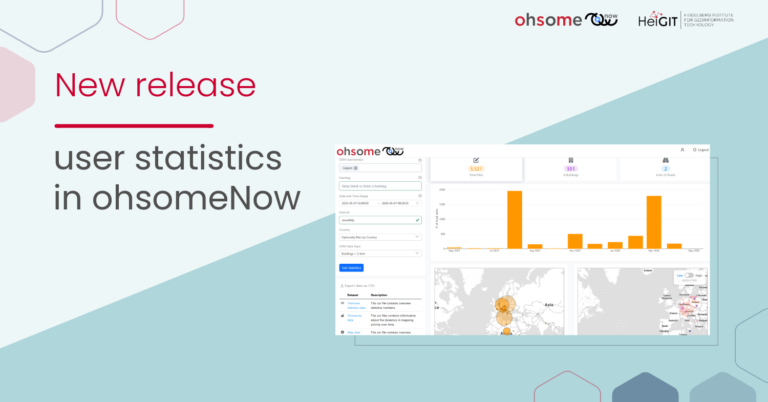
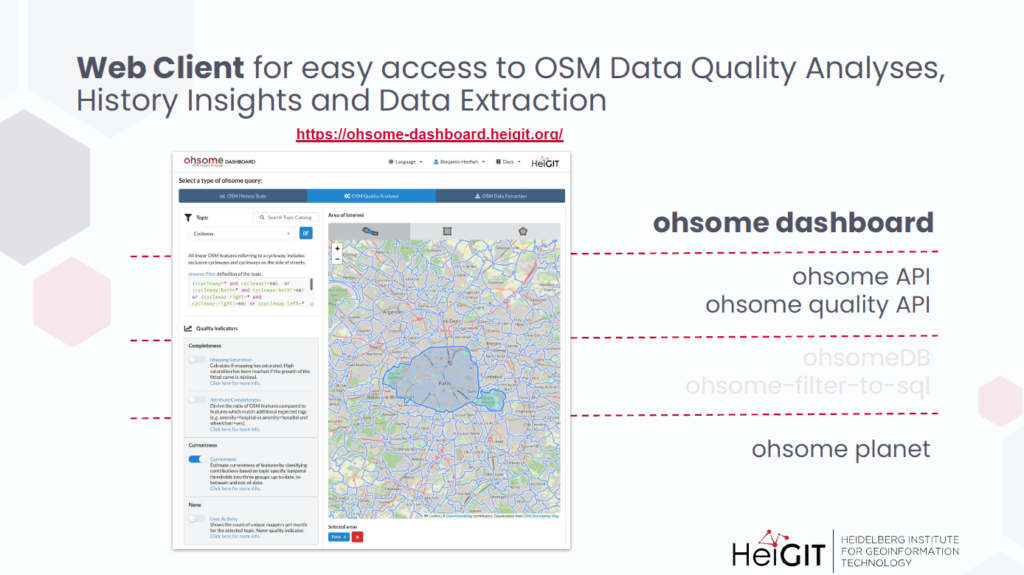
The ohsome dashboard v2.0 gives you a web interface for exploring the history and quality of OpenStreetMap data without writing code.
The ohsome API v2.0 lets you compute statistics and extract OSM data for any area of interest, with all processing done on our servers.
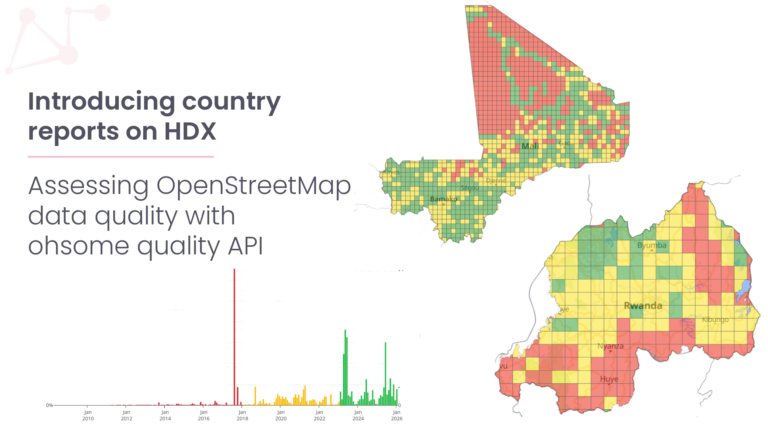
The ohsome quality API v2.0 provides data quality insights for OSM, such as estimates of completeness and currentness.
For users who work with raw OSM data at scale, ohsome-planet transforms OSM history files into GeoParquet and enriches them with changeset metadata and country information. For example, analyzing all OSM data for Germany since 2010 cannot be handled through the dashboard and the ohsome API as they are not designed for requests of that size, but ohsome-planet can process the full dataset on external infrastructure.
Deprecation & Mitigation
ohsome API v2.0 is available and stable. The legacy ohsome API v1 and the OSHDB continue to run in parallel until November 30, 2026, so you have time to test and adapt your workflows. After November 30, 2026, we will decommission both, and requests to the v1 endpoints will stop working.
Migrating from v1 to v2.0
The query structure has changed in v2.0. Our migration guide explains the differences and shows how to adapt existing scripts step by step.
Version 2.0 also requires an API key. Users can create an account and request a key here where they can also manage all their keys in one place. For researchers, NGOs, humanitarian organizations, and other non-profit use cases, we have introduced a collaborative plan with a higher daily quota, which users can apply for at HeiGIT Account.
The URL of the ohsome API has now changed. /v2-rc is deprecated and will be removed eventually. Please only use this URL base in your requests: https://api.heigit.org/ohsome-api/v2/
Learn more
For in-depth technical details, watch our talk and see workshop slides from State of the Map 2026 in Paris: