The Silver Ways project develops a routing system that is designed for older adults, taking into account their needs and preferences. To understand how seniors move through their neighborhoods, we organized workshops with older adults in three urban areas in Mannheim, Uppsala and Kayseri and mapped their daily routes. This direct exchange showed us which preferences and obstacles shape walking in later life, and these insights form the basis for refining the routing system.
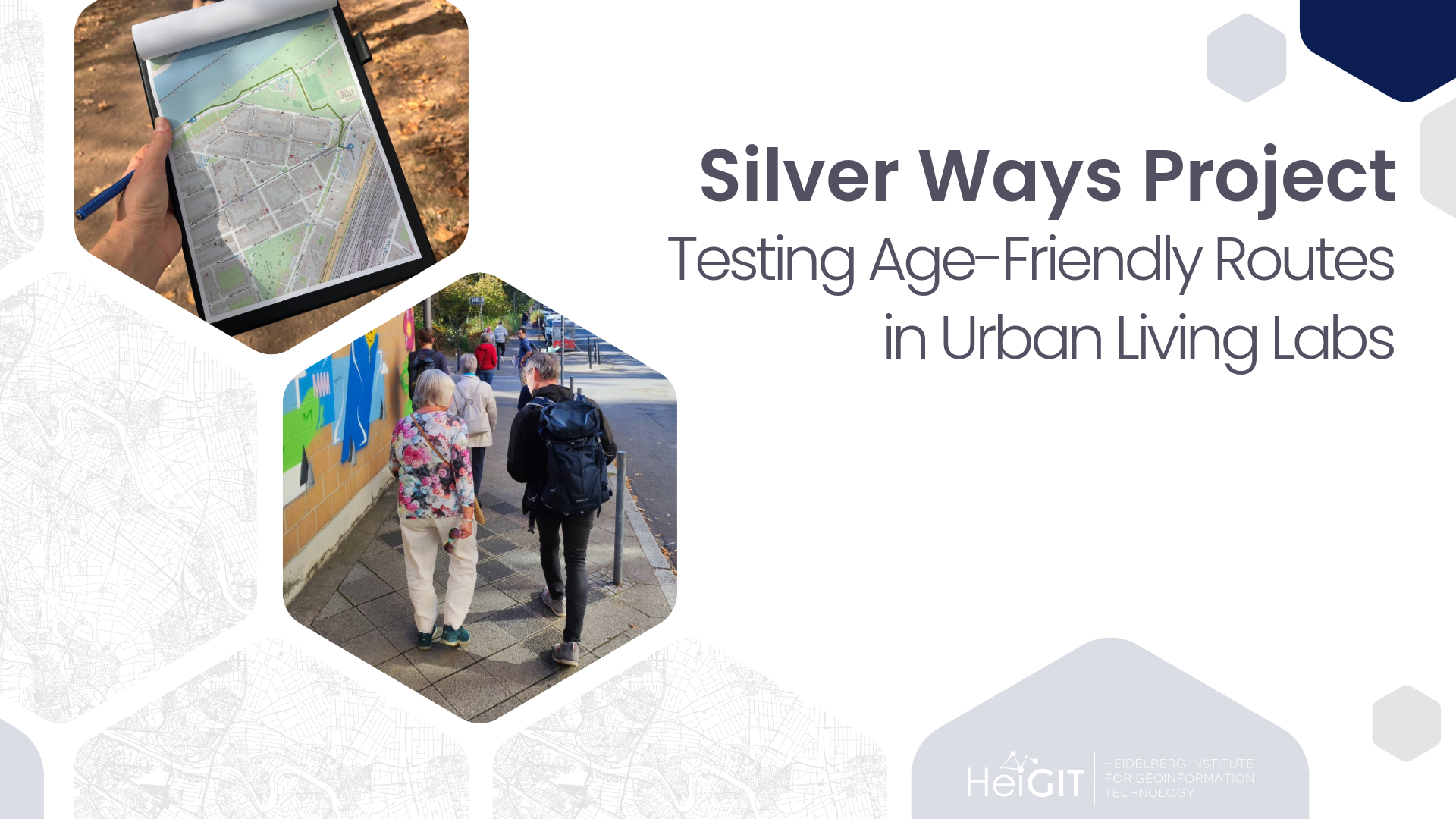
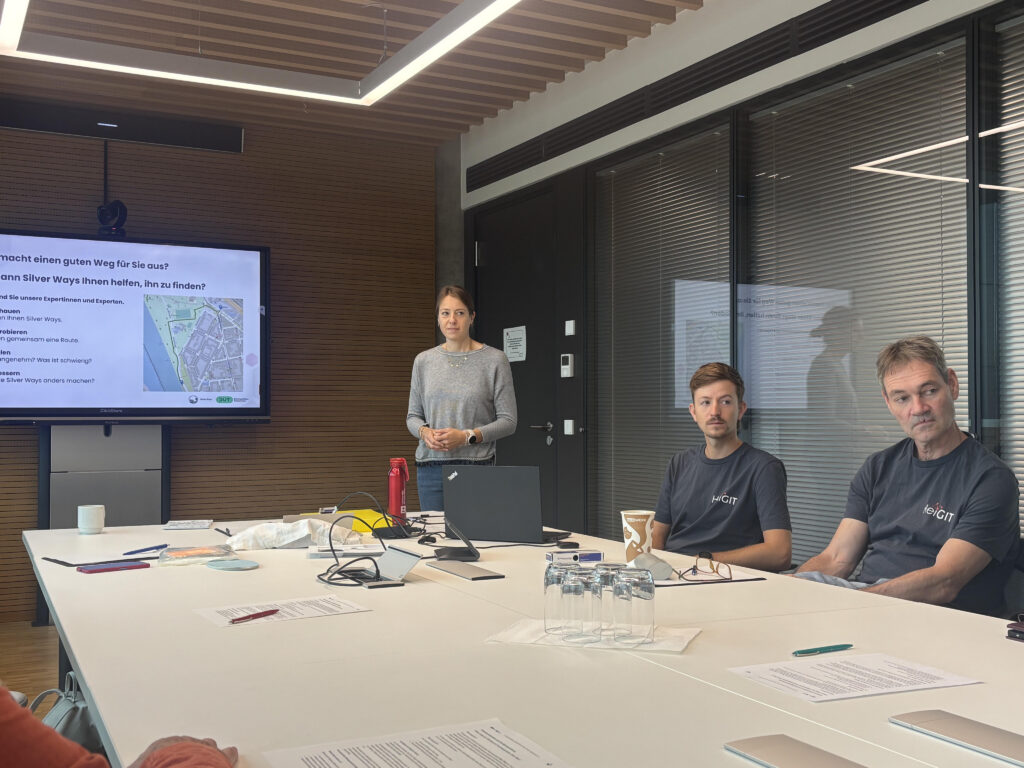
In this second stage, we are testing the system in Urban Living Labs. Older adults join interactive city walks in which they compare the shortest route with the route recommended by Silver Ways. We then use their feedback to refine the system and informs future routing designs. Overall, the walks showed that public toilets, benches, safe surfaces and a feeling of security matter a great deal to older pedestrians.
Walking the city together
The Urban Living Labs build on a bachelor’s thesis at Heidelberg University, which developed and piloted the workshop format. You can read more about this work in our previous blog post.
In Mannheim, we held three Urban Living Labs in different parts of the city. In Schönau, we walked with a senior gymnastics group that included participants using walkers. In Lindenhof and in the city center (the Quadrate), participants signed up through a notice published by the City of Mannheim, and a representative of the municipality joined both walks. In parallel, similar workshops took place in central Uppsala, and in Kayseri.
The walks in Mannheim highlighted three points:
- In the city center, participants found the Silver Ways route calmer, greener and more interesting than the shortest route, although it was only slightly longer.
- Public toilets matter more to participants than green routes. They came up in all three labs, and participants were far more willing to make a detour for a toilet than for a nicer route.
- High curbs and steep curb ramps have led to several falls, and parked cars often block the lowered curbs.
What participants want from the tool
Across Mannheim, Uppsala and Kayseri, participants named the following wishes:
- Many would use the tool mainly for leisure walks, so leisure and everyday routes should be treated separately. For everyday trips, they prefer the fastest known route as the default, with the option to find the nearest bench or toilet.
- Public toilets should be clearly marked on the map with opening hours and costs.
- A simple smartphone app would make the tool easier to adopt.
We will now use this feedback to adapt the Silver Ways routing system.
Silver Ways is co-funded by the European Union through the Driving Urban Transitions (DUT) Partnership and brings together HeiGIT, the GIScience Research Group and TdLab Geography at Heidelberg University, Uppsala University and Abdullah Gül University. More information is available on the project website.